Honor Oak Skip Hire — Recycling and Sustainability
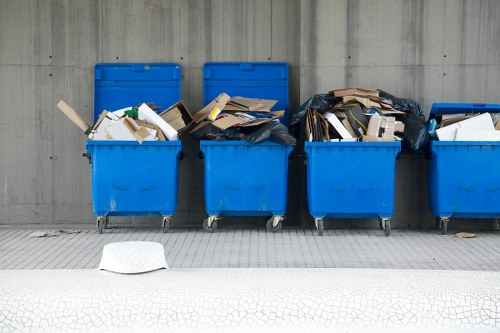 Honor Oak Skip Hire is committed to creating an eco-friendly waste disposal area across south London. Our approach balances practical rubbish removal with clear, measurable sustainability goals. We work within local borough frameworks to support residents and tradespeople who prioritise sustainable rubbish area practices — from household clear-outs to construction site waste.
We set an ambitious recycling percentage target to drive continuous improvement: our immediate goal is a 70% diversion rate from landfill within three years, with a stretch aim of 80% by year five. These targets reflect both the Honor Oak skip hire mission and the wider borough commitments to reduce landfill and increase reuse and recycling.
 Our operations coordinate closely with local transfer stations and civic facilities to keep items circulating in the local economy. We regularly use South London transfer facilities and borough transfer points in Lewisham and Southwark to sort and process material streams efficiently.
Local Transfer Stations and Material Flows
Using nearby transfer stations allows us to route mixed loads for specialist processing — for example, sending plasterboard to dedicated recyclers, timber to chipping and biomass processors, and metals to scrap recyclers. This reduces haulage distances and supports a low-carbon logistics model.What we separate and why
We follow the boroughs' approach to waste separation: dedicated streams for food and garden waste, mixed dry recycling, hardcore and soils, plus segregated hazardous or WEEE items. That localised separation improves the recovery rate and ensures materials enter the correct reuse or recycling chain. In practical terms, our sustainable skip services encourage the segregation of:
- Timber and wood for reuse or chipping
- Metals and ferrous materials for scrap recycling
- WEEE (electricals) for specialist processors
- Textiles and furniture destined for charity partners
- Inert materials (concrete, bricks) for crushing and reuse
Partnerships with charities are central to our reuse-first strategy. We work with local and national charities, collecting reusable furniture, clothing and small household items and directing them to organisations such as Emmaus, local community reuse centres and selected social enterprise partners. These collaborations support people in need and reduce waste by keeping repairable goods in use.
Working with charities also helps us meet our sustainability commitments by ensuring items that are still serviceable avoid shredding or disposal. Our teams prioritise salvageable items during collection and coordinate drop-offs when appropriate.
We also run regular donations triage at transfer partners so that reusable goods are identified and diverted before any processing that would prevent reuse.
Low-Carbon Fleet and Route Optimisation
Transitioning our fleet is a priority for a greener skip hire operation. We deploy a mix of electric vans for local collections and Euro 6-compliant vehicles for heavier loads, reducing particulate and NOx emissions in residential areas.Route planning is optimised using scheduling software to minimise mileage and idle time, lowering fuel consumption and emissions. By consolidating collections and matching vehicle size to load type we cut unnecessary journeys and improve operational efficiency.
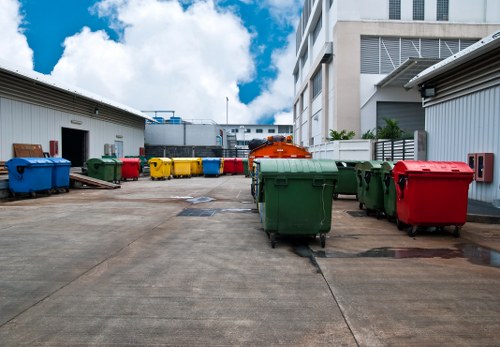 Our low-emission vans and electric vehicles form a growing portion of the fleet, with charging infrastructure and phased replacements planned to meet our carbon reduction roadmap.
Sustainable Rubbish Area Practices
On site, we advise clients on how to create a small sustainable rubbish area: clear labelling of skips, separated containers for food/garden waste, and a drop-off point for items suitable for charity collection. These simple steps significantly increase the chances of reuse and recycling.We provide clear signage and staff support where needed, and offer tailored skip options that encourage separation at source: mixed recycling skips, timber-only skips, and inert skips for construction waste.
 Every load we collect is audited as part of our quality control to track recycling performance and inform continuous improvement toward our recycling percentage target.
Reporting and transparency are part of our promise: we monitor tonnes diverted, vehicles emissions, and the number of charity partners supported. Progress is measured against our public targets and adjusted as we scale low-carbon initiatives.
By combining local transfer station use, charity partnerships, and an expanding fleet of low-carbon vans, Honor Oak skip hire aims to offer a practical, neighbourhood-focused model for an eco-friendly waste disposal area that supports borough waste separation policies and fosters circular economy outcomes.
Join us in making waste management in Honor Oak and nearby boroughs cleaner, greener and more circular.